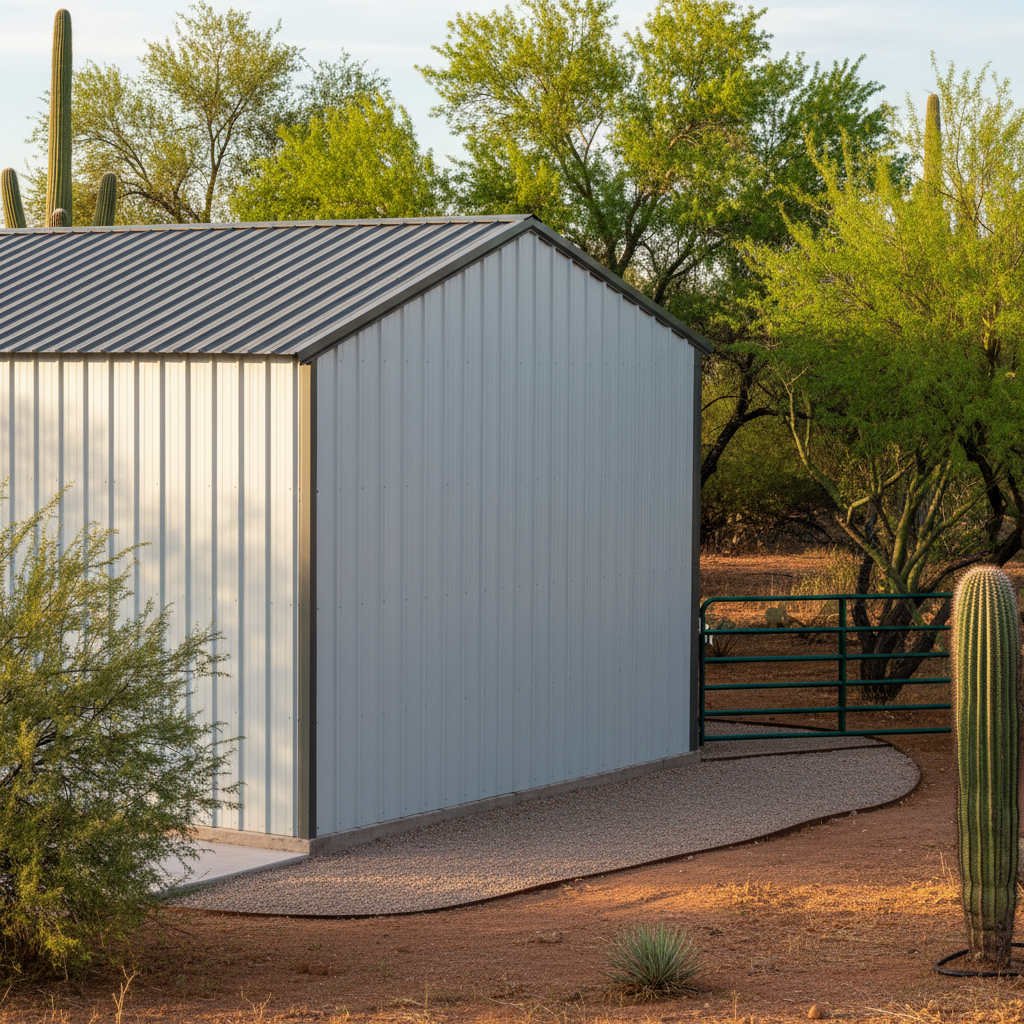
You've put your money into a metal post-frame building right here in Apache Junction. Good call, if you ask me. These things are tough, built to last, and a smart move for just about anything — from workshops to storage, or even a guest house. But "tough" doesn't mean "maintenance-free." Nothing out here in the desert truly is, not with our sun, dust, and those occasional monsoon downpours.
Think about your truck for a second. You wouldn't just drive it forever without checking the oil or rotating the tires, right? It's the same deal with your metal building. A little regular attention really goes a long way. It helps make sure the building stands strong for decades, protecting your stuff and keeping its value.
Keeping Your Metal Building Going Strong in Our Desert Climate
Our Arizona sun is no joke. It's fantastic for solar panels, sure, but not so much for paint and sealants if they aren't top-notch. The single biggest thing you can do to make your metal building last longer is to start with good materials and proper installation. If Apache Junction Metal Buildings put it up for you, you're already way ahead of the game. We use stuff made to handle this kind of abuse.
Beyond that, it's all about protecting those surfaces. The pre-painted metal panels on your building are sturdy, but UV radiation still wears them down over time. Keep an eye on the finish. If you start noticing it getting chalky or fading, especially on those south and west-facing walls, it might be time to think about a professional cleaning and maybe a re-coating down the road. Don't wait until the paint is practically falling off.
Another big one for us is dust. We get a ton of it, right? That dust can settle on your roof and walls, and when it mixes with the occasional rain, it can turn into a grimy layer. This layer holds moisture and can actually speed up wear and tear. Cleaning things regularly helps a lot with this.
What "Regular Maintenance" Actually Looks Like
This isn't brain surgery, but it does need a little consistency. I'd suggest a good, thorough inspection twice a year – once before summer really heats up (say, April or May) and then again after monsoon season wraps up (late September, early October). Here's what I'd be looking for:
- Roof and Gutters: Get up there safely, or use binoculars from the ground if you can't. Look for any junk – leaves, branches, or even those annoying tumbleweeds that get stuck. Clear out your gutters, too. If water can't drain, it'll just sit there and find a way inside. Check for any loose or missing fasteners on the roof panels.
- Panel Condition: Walk all the way around the building. Look for any dings, dents, or scratches that might expose the bare metal. Touch up any small spots with matching paint if you've got it. Check for rust, especially around fasteners or cut edges.
- Sealants and Flashing: These are your main defense against water. Look closely at all the seams, around doors and windows, and where the roof meets the walls. Are the sealants cracked, peeling, or missing? This is a common spot for problems, especially with our wild temperature swings.
- Doors and Windows: Make sure they open and close smoothly. Lube up hinges and tracks if they need it. Inspect the weather stripping for any gaps or damage.
- Foundation/Base: Don't let water pool around the bottom of your building. Our caliche soil can be tricky; if water sits, it can cause issues over time, even with a good concrete slab. Make sure water drains away from the building, not toward it.
- Interior: Take a peek inside. Any signs of water getting in? Stains on the ceiling or walls? That's usually the first clue you've got a roof or wall panel problem.
Warning Signs You Absolutely Can't Ignore
Some things just scream "hey, pay attention!" Don't put these off, seriously:
- Rust: Any visible rust, especially on the main structural parts or big areas of panels, is a red flag. Small spots you can treat, but widespread rust means a bigger problem.
- Water Leaks: Obvious, I know, but even a tiny drip can lead to huge issues like mold or damage to insulation and whatever you've got stored inside. Find where it's coming from right away.
- Loose or Missing Fasteners: On the roof, walls, or trim. These are super important for holding everything together, especially when those strong winds kick up.
- Sagging or Deformed Panels: If a roof or wall panel looks bowed or out of alignment, that's a structural concern. Get it checked.
- Pest Infestation: Birds, rodents, and insects love to make homes in small gaps. Seal up any entry points you find.
When It's Time to Call a Professional
Look, I'm all for DIY when it's safe and you know what you're doing. But some jobs are really best left to the pros. You should definitely give us or another reputable contractor a call if:
- You've got serious roof damage. Working on a roof can be dangerous, especially a metal one.
- You're seeing widespread rust or panels falling apart. This might mean you need to replace panels or get specialized coatings.
- You have leaks that just won't quit, and you can't find or fix them. Water intrusion can be tricky, and a pro has the right tools and experience to pinpoint the source.
- There are structural concerns. Any bowing, sagging, or major deformation of the frame or panels needs someone to look at it immediately.
- You need specialized repairs. Things like welding, extensive re-sealing, or big re-painting jobs are usually best handled by people with the right gear and know-how.
Don't let tiny problems balloon into big, expensive ones. A little proactive maintenance and knowing when to call in the cavalry will keep your Apache Junction Metal Buildings structure serving you well for many, many years to come.